Showing posts with label US News. Show all posts

Saturday, October 5, 2013

Budget stalemate persists as focus shifts to debt ceiling debate

With prospects for a quick end to the 5-day-old partial government shutdown diminishing, lawmakers are turning their attention to the debate over a mid-October deadline for avoiding a threatened first-ever default.
At a press conference on Friday, House Speaker John Boehner signaled a possible shift in focus away from the fight over ObamaCare and the budget, arguing that Congress must fight for spending cuts as part of any deal to raise the debt ceiling.
"This isn't some damn game," Boehner said, as the White House and Democrats held to their position of agreeing to negotiate only after the government is reopened and the $16.7 trillion debt limit raised.
Senate Majority Leader Harry Reid, D-Nev., also said the two issues were linked. "We not only have a shutdown, but we have the full faith and credit of our nation before us in a week or ten days," he said.
According to warnings by the administration and Wall Street, failure to raise the debt limit, by contrast, had the potential to destablize financial markets and inflict harm on the economy quickly.
Treasury Secretary Jacob Lew has said that unless Congress acts, the government will be unable to pay all its debts and will run the risk of default. He has urged lawmakers to act by Oct. 17.
Debt limit bills typically pass first in the House, then move to the Senate. So far, neither Boehner nor the rest of the leadership has said when they expect to draft and have a vote on one. More than a week ago, they circulated a list of items that might be included— calls for higher Medicare costs for better-off seniors, a wholesale easing of environmental regulations and approval of the Keystone Pipeline among them.
In a letter sent to Lew Friday, Sen. Orrin Hatch, R-Utah, accused the treasury secretary of creating "needless panic" with financial institutions and the public over raising the debt ceiling and warned the White House against making statements about the dangers of default.
“This is irresponsible and threatens to create needless panic. Comments such as those recently made by administration officials invite greater market uncertainty and volatility, which threatens the livelihoods and savings of millions of Americans,” Hatch wrote.
At the White House, President Obama has said repeatedly he will not negotiate over the terms of debt limit legislation but is willing to discuss a range of issues once the government is reopened and the Treasury able to borrow freely again.
House Republicans are continuing with their strategy to pass a series of small bills, effectively daring Democrats to oppose them while simultaneously pressuring them to come to the negotiating table over the broader budget.
The House on Friday voted to fund the Federal Emergency Management Agency. The chamber voted later in the day to approve a bill to fund nutrition programs for women, infants and children.
The House is scheduled Saturday to vote on legislation backed by the White House and congressional Democrats that would make sure the 800,000 sidelined government employees get their pay when the shutdown ends.
The Senate is expected to clear that bill later, even as early as Saturday, for Obama's signature.
Meanwhile, Secretary of State John Kerry on Saturday urged Congress to think long and hard about the message U.S. sends the world when "we can't get our own act together."
Kerry, in Bali for an economic summit, called Saturday for Congress to reach an agreement to end the partial shutdown of the federal government, now entering its fifth day.
President Obama had planned to attend the summit but canceled his travel plans to remain in Washington and deal with the shutdown. Kerry is now leading the U.S. delegation in the talks.
Kerry said that America's "friends and foes" shouldn't mistake the government shutdown as anything other than a "moment of politics."


Friday, October 4, 2013

2 of 4 Found Dead in Car Faced Child Porn Charges

Two of four people who were found dead in a vehicle on a secluded road in northern Alabama were facing child pornography and molestation charges in Tennessee, Alabama authorities said Thursday.

Winston County Sheriff Rick Harris said two people found fatally shot in a vehicle Wednesday night near Double Springs had court dates in Tennessee the day their bodies were discovered.

Authorities say the car containing the bodies was parked in the William B. Bankhead National Forest. The area is about 60 miles northwest of Birmingham.

Harris said the victims — three men and a woman — were from Tennessee. Their identities have not yet been released.

The victims' bodies were found in a white car with out-of-state license plates and authorities say a passer-by noticed the vehicle on her way to work. The woman called police when she noticed the car parked in the same place on her way home.

Throughout the day, Harris stressed that authorities believed the discovery of the bodies was an isolated incident.
 
"No one in our area was endangered or is missing at this point," he said. "To our knowledge, there's no one locally in our county involved."

Dozens of law enforcement officers were at the scene just south of the Double Springs area Thursday and police haven't identified any potential suspects in the slayings.

"We spent all night processing the scene and we took the vehicle to an indoor location to process the vehicle," Harris said Thursday morning.

Investigators were waiting on results of forensics testing. He said the Alabama Bureau of Investigation is assisting his agency with the case, as well as the coroner and district attorney's office.

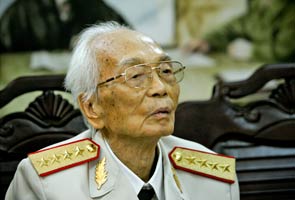
Legendary Vietnam General Vo Nguyen Giap dies at 102

 photo of Vietnamese General Vo Nguyen Giap at his home in Hanoi, Vietnam

Hanoi, Vietnam: Gen. Vo Nguyen Giap, the brilliant and ruthless commander who led a ragtag army of guerrillas to victory in Vietnam over first the French and then the Americans, died on Friday. The last of the country's old-guard revolutionaries was 102.

A national hero, Giap enjoyed a legacy second only to that of his mentor, founding president and independence leader Ho Chi Minh.

Giap died in a military hospital in the capital of Hanoi, where he had spent nearly four years because of illnesses, according to a government official and a person close to him. Both spoke on condition of anonymity before the death was announced in state-controlled media.

Known as the "Red Napoleon," Giap commanded guerrillas who wore sandals made of car tires and lugged artillery piece by piece over mountains to encircle and crush the French army at Dien Bien Phu in 1954. The unlikely victory - still studied at military schools - led to Vietnam's independence and hastened the collapse of colonialism across Indochina and beyond.

Giap then defeated the U.S.-backed South Vietnam government in April 1975, reuniting a country that had been split into communist and noncommunist states. He regularly accepted heavy combat losses to achieve his goals.

"No other wars for national liberation were as fierce or caused as many losses as this war," Giap told The Associated Press in 2005 - one of his last known interviews with foreign media on the eve of the 30th anniversary of the fall of Saigon, the former South Vietnamese capital.

"But we still fought because for Vietnam, nothing is more precious than independence and freedom," he said, repeating a famous quote by Ho Chi Minh.

Giap remained sharp and well-versed in current events until he was hospitalized. Well into his 90s, he entertained world leaders at his shady colonial-style home in Hanoi.

Although widely revered in Vietnam, Giap was the nemesis of millions of South Vietnamese who fought alongside U.S. troops and fled their homeland after the war, including the many staunchly anti-communist refugees who settled in the United States.

Born Aug. 25, 1911, in central Vietnam's Quang Binh province, Giap became active in politics in the 1920s and worked as a journalist before joining the Indochinese Communist Party. He was jailed briefly in 1930 for leading anti-French protests and later earned a law degree from Hanoi University.

He fled French police in 1940 and met Ho Chi Minh in southwestern China before returning to rural northern Vietnam to recruit guerrillas for the Viet Minh, a forerunner to the southern insurgency later known as the Viet Cong.

During his time abroad, his wife was arrested by the French and died in prison. He later remarried and had five children.

In 1944, Ho Chi Minh called on Giap to organize and lead guerrilla forces against Japanese invaders in World War II. After Japan surrendered to Allied forces the next year, the Viet Minh continued their fight for independence from France.

Giap was known for his fiery temper and as a merciless strategist, but also for being a bit of a dandy. Old photos show him reviewing his troops in a white suit and snappy tie, in sharp contrast to Ho Chi Minh, clad in shorts and sandals.

Giap never received any formal military training, joking that he attended the military academy "of the bush."

At Dien Bien Phu, his Viet Minh army surprised elite French forces by surrounding them. Digging miles of trenches, the Vietnamese dragged artillery over steep mountains and slowly closed in during the bloody, 56-day battle that ended with French surrender on May 7, 1954.

"If a nation is determined to stand up, it is very strong," Giap told foreign journalists in 2004 prior to the battle's 50th anniversary. "We are very proud that Vietnam was the first colony that could stand up and gain independence on its own."

It was the final act that led to French withdrawal and the Geneva Accords that partitioned Vietnam into north and south in 1956. It paved the way for war against Saigon and its U.S. sponsors less than a decade later.

The general drew on his Dien Bien Phu experience to create the Ho Chi Minh Trail, a clandestine jungle network that snaked through neighboring - and ostensibly neutral - Laos and Cambodia to supply his troops fighting on southern battlefields.

Against U.S. forces with sophisticated weapons and B-52 bombers, Giap's guerrillas prevailed again. But more than 1 million of his troops died in what is known in Vietnam as the "American War."

"We had to use the small against the big; backward weapons to defeat modern weapons," Giap said. "At the end, it was the human factor that determined the victory."

Historian Stanley Karnow, who interviewed Giap in Hanoi in 1990, quoted him as saying: "We were not strong enough to drive out a half-million American troops, but that wasn't our aim. Our intention was to break the will of the American government to continue the war."

Giap had been largely credited with devising the 1968 Tet Offensive, a series of surprise attacks on U.S. strongholds in the south by Viet Cong and North Vietnamese forces during lunar new year celebrations. Newer research, however, suggests that Giap had opposed the attacks, and his family has confirmed he was out of the country when they began.

The Tet Offensive shook U.S. confidence, fueled anti-war sentiment and prompted President Lyndon B. Johnson to announce that he would not seek re-election. But it took another seven years for the war to be won.

On April 30, 1975, communist forces marched through Saigon with tanks, bulldozing the gates of what was then known as Independence Palace.

"With the victory of April 30, slaves became free men," Giap said. "It was an unbelievable story."

It came at a price for all sides: the deaths of as many as 3 million communists and civilians, an estimated 250,000 South Vietnamese troops and 58,000 Americans.

Throughout most of the war, Giap served as defense minister, armed forces commander and a senior member of Vietnam's ruling Communist Party, but he was slowly elbowed from the center of power after Ho Chi Minh's death in 1969. The glory for victory in 1975 went not to Giap, but to Gen. Van Tien Dung, chief of the general staff.

Giap lost the defense portfolio in 1979 and was dropped from the powerful Politburo three years later. He stepped down from his last post, as deputy prime minister, in 1991.

Despite losing favor with the government, the thin, white-haired man became even more beloved in Vietnam as he continued to speak out. He retired in Hanoi as a national treasure, writing his memoirs and attending functions - always wearing green or eggshell-colored military uniforms with gold stars across the shoulders.

He held news conferences, reading from handwritten notes and sometimes answering questions in French to commemorate war anniversaries. He invited foreign journalists to his home for meetings with high-profile visitors and often greeted a longtime American female AP correspondent in Hanoi with kisses on both cheeks.

He kept up with world news and offered advice in 2004 for U.S. troops fighting in Iraq.

"Any forces that wish to impose their will on other nations will certainly face failure," he told reporters.

Among the foreign dignitaries he received was friend and fellow communist revolutionary Fidel Castro of Cuba. In 2003, they sat in Giap's home chatting and laughing beneath a portrait of Vladimir Lenin, founder of the Soviet Union.

The general's former nemesis, U.S. Defense Secretary Robert McNamara, visited in 1995. He asked about a disputed chapter of the Vietnam War, the 1964 Gulf of Tonkin incident in which two U.S. Navy destroyers were purportedly fired upon by North Vietnamese boats. It's the event that gave the U.S. Congress justification for escalating the war.

Later, many questioned whether the attack actually occurred. During his visit, McNamara asked Giap what happened that night. He replied: "Absolutely nothing."

At age 97, Giap took a high-profile role in a debate over the proposed expansion of a bauxite mine that he said posed environmental and security risks, in part because it was to be operated by a Chinese company in the restive Central Highlands. He also protested the demolition of Hanoi's historic parliament house, Ba Dinh Hall. Both projects, however, went ahead as planned.

Giap celebrated his 100th birthday in 2011. He was too weak and ill to speak, but he signed a card thanking his "comrades" for their well-wishes. Even then, he continued to be briefed every few days about international and national events.

Late in life, Giap encouraged warmer relations between Vietnam and the U.S., which re-established ties in 1995 and have become close trading partners. Vietnam has also recently looked to the U.S. military as a way to balance China's growing power in the disputed South China Sea.

Man Freed From Prison After 41 Years Dies in La.

A 71-year-old man who spent more than four decades in solitary confinement in Louisiana died Friday, less than a week after a judge freed him and granted him a new trial.

Herman Wallace's attorneys said he died at a supporter's home in New Orleans. Wallace had been diagnosed with terminal liver cancer and stopped receiving treatment. Wallace was held for years at the Louisiana State Penitentiary at Angola. In 2009, Wallace was moved from Angola to "closed-cell restriction" at Hunt Correctional in St. Gabriel, where he recently was taken to the prison's hospital unit.

Jackie Sumell, a longtime supporter of Wallace, said he was surrounded by friends and family when he died. Wallace at one point told them, "I love you all," according to Sumell.
"He was in and out of consciousness," she said.

U.S. District Judge Brian Jackson in Baton Rouge had ordered Wallace released from prison on Tuesday after granting him a new trial. Jackson ruled women were unconstitutionally excluded from the grand jury that indicted Wallace in the stabbing death of the 23-year-old guard, Brent Miller.

A West Feliciana Parish grand jury re-indicted Wallace on charges connected to Miller's death on Thursday. District Attorney Sam D'Aquilla told The Advocate newspaper that Jackson ordered a new trial because he "perceived a flaw in the indictment — not his murder conviction."

Wallace and two other inmates held in solitary confinement for years came to be known as the "Angola 3."
Wallace's attorneys said in a statement Friday that it was an honor to represent him.

"Herman endured what very few of us can imagine, and he did it with grace, dignity, and empathy to the end," they said. "Although his freedom was much too brief, it meant the world to Herman to spend these last three days surrounded by the love of his family and friends. One of the final things that Herman said to us was, 'I am free. I am free.'"

Wallace, of New Orleans, was serving a 50-year armed robbery sentence when Miller was stabbed to death.

Wallace and fellow "Angola 3" member Albert Woodfox denied involvement in Miller's killing, claiming they were targeted because they helped establish a prison chapter of the Black Panther Party at the Angola prison in 1971, set up demonstrations and organized strikes for better conditions.
In 2010, Woodfox was moved to the David Wade Correctional Center in Homer, where he remains in custody.

The third "Angola 3" member, Robert King, who was convicted of killing a fellow inmate in 1973, was released in 2001 after his conviction was reversed.

NC Church Mourns Victims of Fiery Tenn. Bus Crash

Daniel Morrison said his parents were always there for him — especially after his wife Monica died in December of a brain aneurysm. They stayed long hours at his home in North Carolina's Piedmont region, helping him raise his 2-year-old son and 4-year-old daughter.

Now Morrison is processing more devastating news. He learned Wednesday his parents were among eight people killed when a church bus carrying members blew a tire, veered across a Tennessee highway median and crashed into a sport utility vehicle and a tractor-trailer.

His father, who had once worked for a trucking company and his mother, once a school teacher, were gone. Randy and Barbara Morrison were both 66 and had been married for nearly 50 years.

"You expect things to happen — you don't expect them to happen in one year," he said. "I know the Lord has a reason for everything, but I don't know what it is yet."

The bus was carrying a group of seniors from a Statesville, N.C., church back home from their big annual outing — a trip to a three-day festival in Gatlinburg, Tenn., featuring gospel singers and speakers.

The collision occurred Wednesday on Interstate 40 in northeastern Tennessee. It left the bus on its side next to the tractor-trailer, the wreckage extending across two lanes of traffic and partly into the median. Fourteen others were hurt, two in critical condition.

The Tennessee Highway Patrol on Thursday afternoon identified seven of the eight people killed.
Six of the dead were members of the Front Street Baptist Church in Statesville, including Randy Morrison, who police said was driving the bus, and his wife, Barbara.

Other victims from the church were 95-year-old Cloyce Matheny, 69-year-old Brenda Smith, 62-year-old Marsha McLelland and 73-year-old John Wright. All were from Statesville except Wright, from nearby Mocksville, N.C.

The Tennessee Highway Patrol said the bus, once the tire ruptured, cross the median into oncoming traffic. The tractor-trailer caught fire.

One person in the sport utility vehicle, Trent Roberts, 24, of Knoxville, Tenn., was killed. The driver of the tractor-trailer also was killed but has not yet been identified.
And the partial government shutdown has affected the investigation.

The National Transportation Safety Board wasn't sending investigators to Tennessee to probe the deadly crash — even though it's the type of accident the agency would typically look into. Nearly all of the board's 400 employees have been furloughed because of the shutdown, including accident investigators.

Statesville is a small city located at the juncture of Interstates 40 and 77, and about 30 miles north of Charlotte.

When Daniel Morrison first heard about the fiery bus crash, he braced for the worst. For hours after the crash, Daniel Morrison frantically scrambled to find out information about his parents. Were they injured? If so, how bad?

Then a pastor at the Front Street Baptist Church called and broke the devastating news.
"I'm still processing it," said Daniel Morrison, one of the couple's five children, pausing to shake his head. He said both had looked forward to the trip, having devoted so much to their church.

The night before the trip, Randy Morrison asked his neighbor Kenneth Snead to help clean the bus. Morrison lived across the street from the church and was always working on the bus, Snead said.

International Warships Welcomed in Sydney Harbor

Warships from 17 nations including the United States and China were welcomed in Sydney Harbor on Friday as the city celebrates the centenary of the fledgling Australian navy fleet's first visit.
Thousands of spectators lined the harbor shores under blue skies to watch the warships power into Australia's largest city.

Seven Australian warships entered the harbor in line as the first Australian navy fleet of seven cruisers and destroyers did for the first time on Oct. 4, 1913
.
Around 40 warships plus 16 tall ships will participate in the International Fleet Review on Saturday, which is the main event commemorating the arrival of the original Royal Australian Navy fleet a century ago.
Governor-General Quentin Byrce, who represents Australia's head of state, Queen Elizabeth II, welcomed the ships on Friday and will officially review the fleet on Saturday.

Prince Harry, fourth in line to the British throne, will also attend Saturday's event.
Australia was a collection of six independent British colonies until they federated in 1901. Battlecruiser HMAS Australia became the navy's first flagship two years after it was launched in Britain.

The United States sent guided missile cruiser USS Chosin and China sent destroyer Qingdao.
The Defense Department said warships were also sent by Britain, Brunei, Micronesia, France, India, Indonesia, Japan, Malaysia, New Zealand, Nigeria, Papua New Guinea, Singapore, Spain, Thailand and Tonga.

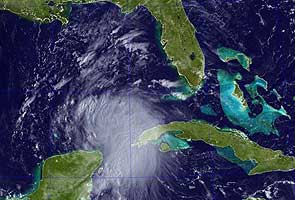
Tropical Storm Karen forms in the Gulf of Mexico, targets US coast


New Orleans: Preparations began yesterday along the central Gulf Coast as newly formed Tropical Storm Karen threatened to become the first named tropical system to menace the United States this year.

Hurricane and tropical storm watches were posted from southeast Louisiana to Florida and some oil and gas platforms in the storm's projected path were being secured and evacuated.

The National Hurricane Center in Miami said Karen was about 430 miles (695 km) south of the mouth of the Mississippi River on Thursday afternoon and had maximum sustained winds of 65 mph (100 kph).

The hurricane watch was in effect from Grand Isle, La., to Indian Pass in the Florida Panhandle. A tropical storm watch also was in effect for parts of the Louisiana coast west of Grand Isle, including the New Orleans area.

Karen was moving north-northwest at 12 mph (19 kph). It could be at or near hurricane strength by today before approaching the northern Gulf Coast a day later, forecasters said.

While meteorologists said it was too soon to predict the storm's ultimate intensity, they said it could weaken a bit as it approaches the coast over the weekend.

"Our forecast calls for it to be right around the border of a hurricane and a tropical storm," said David Zelinsky, a hurricane center meteorologist.

Whether a weak hurricane or strong tropical storm, Karen's effects are expected to be largely the same: heavy rain and the potential for similar storm surge.

Grand Isle Mayor David Camardelle, whose barrier island community about 60 miles south of New Orleans is often the first to order an evacuation in the face of a tropical weather system, said the town is making sure its 10 pump stations are ready. He is encouraging residents and clean out drainage culverts and ditches in anticipation of possible heavy rain and high tides.

Otherwise, residents were monitoring the storm and hoping to dodge the foul weather.

"Hopefully, this one is just a little rain event," said Camardelle "We don't need a big storm coming at us this late in the season."

Zelinsky said residents in the warning areas should listen to their local emergency managers for advisories. "Now is the time to begin making preparations," Zelinsky said.

Forecasters said a cold front approaching from the northwest was expected to turn Karen to the northeast, away from the Louisiana coast and more toward the Florida Panhandle or coastal Alabama. But the timing of the front's arrival over the weekend was uncertain.

Tropical Storm Karen forms in the Gulf of Mexico, targets US coast

New Orleans: Preparations began yesterday along the central Gulf Coast as newly formed Tropical Storm Karen threatened to become the first named tropical system to menace the United States this year.

Hurricane and tropical storm watches were posted from southeast Louisiana to Florida and some oil and gas platforms in the storm's projected path were being secured and evacuated.

The National Hurricane Center in Miami said Karen was about 430 miles (695 km) south of the mouth of the Mississippi River on Thursday afternoon and had maximum sustained winds of 65 mph (100 kph).

The hurricane watch was in effect from Grand Isle, La., to Indian Pass in the Florida Panhandle. A tropical storm watch also was in effect for parts of the Louisiana coast west of Grand Isle, including the New Orleans area.

Karen was moving north-northwest at 12 mph (19 kph). It could be at or near hurricane strength by today before approaching the northern Gulf Coast a day later, forecasters said.

While meteorologists said it was too soon to predict the storm's ultimate intensity, they said it could weaken a bit as it approaches the coast over the weekend.

"Our forecast calls for it to be right around the border of a hurricane and a tropical storm," said David Zelinsky, a hurricane center meteorologist.

Whether a weak hurricane or strong tropical storm, Karen's effects are expected to be largely the same: heavy rain and the potential for similar storm surge.

Grand Isle Mayor David Camardelle, whose barrier island community about 60 miles south of New Orleans is often the first to order an evacuation in the face of a tropical weather system, said the town is making sure its 10 pump stations are ready. He is encouraging residents and clean out drainage culverts and ditches in anticipation of possible heavy rain and high tides.

Otherwise, residents were monitoring the storm and hoping to dodge the foul weather.

"Hopefully, this one is just a little rain event," said Camardelle "We don't need a big storm coming at us this late in the season."

Zelinsky said residents in the warning areas should listen to their local emergency managers for advisories. "Now is the time to begin making preparations," Zelinsky said.

Forecasters said a cold front approaching from the northwest was expected to turn Karen to the northeast, away from the Louisiana coast and more toward the Florida Panhandle or coastal Alabama. But the timing of the front's arrival over the weekend was uncertain.

Obama cancels visits to Indonesia, Brunei due to U.S. government shutdown

U.S. President Barack Obama delivers remarks on the government funding impasse at M. Luis Construction, a local small business in Rockville, Maryland, near Washington, October 3, 2013. REUTERS/Jason Reed

(Reuters) - President Barack Obama canceled plans to attend summits in Indonesia and Brunei on Thursday, bowing to the reality that the political impasse over the U.S. government shutdown requires him to remain in Washington.

The decision means Obama will no longer depart on Saturday for what had originally been a four-nation, week-long Asia trip. He had canceled visits to Malaysia and the Philippines earlier this week because of his budget struggle with Republicans in Congress.


The move to cancel the remaining stops in Indonesia and Brunei, where two summits critical to U.S. interests in Asia are being held, was made on the third day of the U.S. government shutdown and was a sign that it could linger for days, as Obama and Republicans battle over funding.

"The president made this decision based on the difficulty in moving forward with foreign travel in the face of a shutdown, and his determination to continue pressing his case that Republicans should immediately allow a vote to reopen the government," the White House said.

It could have been damaging for Obama in terms of appearance to leave the United States and to be seen rubbing shoulders with foreign leaders abroad at a time of budget crisis in Washington.

The stalemate has idled hundreds of thousands of federal government workers and comes two weeks before Washington faces an even more crucial deadline - raising the U.S. debt limit so the United States can pay its bills. A bitter debate rages over that issue as well.

Secretary of State John Kerry will lead delegations to both countries in place of Obama. The president had been scheduled to attend the Asia-Pacific Economic Cooperation forum in Bali, Indonesia, and a separate Asia security summit in Brunei.

Obama phoned both President Susilo Bambang Yudhoyono and the Sultan of Brunei to inform them of his decision, the White House said.

Canceling the trip was a direct result of the budget feud that has enveloped Washington. Republicans who control the House of Representatives have blocked a vote on legislation to fund the government because they want to gut Obama's signature healthcare law, which came into effect on October 1.

The White House statement was sharply critical of Republicans, blaming them for the trip's cancellation.
"This completely avoidable shutdown is setting back our ability to create jobs through promotion of U.S. exports and advance U.S. leadership and interests in the largest emerging region in the world," it said.
Obama looks forward to working with Asian allies and returning to the region at a later date, the White House said.

Thursday, October 3, 2013

Nigeria spent $4.2 bn on importation of cars in 2010 – Maku

Abuja – The Federal Executive Council (FEC) on Wednesday in Abuja approved the Automotive Industry Development Plan for the development of the nation’s automotive industry.

The Minister of Information, Mr Labaran Maku, told State House correspondents after the weekly FEC meeting, presided over by President Goodluck Jonathan, that the plan was expected to attract investment to the sector.

According to him, a transformed automotive industry will realise its potential as a major driver of economic growth and diversification, job creation, local value addition, and technology acquisition.

“The most important discussion which took most of our time was the presentation to Council of a broad policy plan to develop the Nigerian automotive industry.

“This Plan, which is part of the Ministry’s industrial revolution plan that had earlier been approved, is aimed at ensuring increased flow of investment for the development of the automotive industry in Nigeria,“ he said.
He said FEC also approved that henceforth, government would purchase vehicles from the assembly plants in the country “unless it is of specialised nature and National Automotive Council (NAC) has certified that it is not produced in Nigeria.“

Maku added that the council approved that the recommendations on the local purchase of vehicles be backed by appropriate legislation to reassure investors that there would be no abrupt change in policy.
Commenting on the Automotive Development Policy, the Minister of Trade and Investments, Mr Olusegun Aganga, said it was unfortunate that not less than N550 billion was spent by Nigerians on the importation of vehicles in 2012.

He said that Nigeria spent $4.2 billion (about N664bn) on importation of cars in 2010, and that “car import takes the biggest share of the country’s foreign reserves followed by other machinery“.
He expressed optimism that the success of the policy would mean a gradual end to the importation of fairly used cars to the country.

Also, the Minister of the Federal Capital Territory, Sen. Bala Muhammed, said that the council approved the rehabilitation and expansion of the Outer Southern Expressway (OSEX) from Villa roundabout to the OSEX/Ring Road 1(RR1) junction, including five interchanges at N39.8 billion. (NAN)

Car chase ends with gunfire near U.S. Capitol

By Tom Cohen, CNNWashington (CNN) -- Police near the U.S. Capitol opened fire on Thursday on a car being chased by authorities, hitting a woman driving the vehicle that also contained a child, an intelligence source told CNN.
The child appeared to be uninjured, according to the source and witnesses.

Capitol Police said an officer was injured in a crash during the afternoon chase that began near the White House.

The chaotic scene, with gunfire erupting near the heart of the U.S. government, brought a swarm of emergency vehicles and caused Congress and surrounding offices to be temporarily locked down. Representatives and senators were in the buildings.
House and Senate sessions were immediately suspended. Police also closed Pennsylvania Avenue in front of the White House.

CNN's Athena Jones, who was at a Senate office building near the Capitol, said she heard gunshots that sounded like fireworks.

The chase began when the woman driving a black sedan got involved in some kind of verbal altercation with officers at a security checkpoint a block from the White House, the intelligence source said.

As police cars arrived at the scene, the vehicle sped away and led police on a wild chase that included running red lights, according to the source.

When the vehicle approached the area of the Capitol building more than a mile away, several squad cars stopped it and officer "came out with their guns drawn," said Frank Schwing, a D.C. resident who witnessed what happened.

The armed officers tried to open the passenger side door, he said.
"At that point, the driver slammed into reverse, slammed into a cruiser, did a 180 (degree turn), took off, and at that point, there were a half dozen or so shots fired," Schwing told CNN, apparently all by small arms from police.

The black vehicle then crashed into security barriers closer to the Capitol building, said police and witnesses.
Multiple sources told CNN that it is not believed at this point any shots were fired from the car and no weapon has been found so far.

In Congress, a Capitol Police bulletin said reports of gunshots required "all occupants in all House office buildings to shelter in place."

"Close, lock and stay away from external doors and windows," the bulletin said. Authorities later lifted the lockdown, with police saying they believed the incident was isolated with no connection to terrorism.
Two people, including a police officer, were transported to a local hospital.

President Barack Obama was briefed on the situation, which occurred on the third day of a government shutdown due to a stalemate in Congress over government funding.

"The timing on this was really kind of scary," said Republican Rep. Blake Farenthold of Texas. "Capitol Hill police are at a lower personnel level because of the shutdown."

UN brewing up new -- and expensive – global 'sustainability development goals'

EXCLUSIVE: The United Nations is planning to create a sweeping new set of “sustainable development goals” for the planet that will likely require trillions of dollars of spending on poverty and the environment, a drastic reorganization of economic production and consumption -- especially in rich countries -- and even greater effort in the expensive war on climate change.
It’s an agenda that its prominent boosters have declared will make the next 15 years “some of the most transformative in human history,” although the exact nature of the goals themselves, and how they are to be achieved, is unclear.
In typical U.N. fashion, panels of high-profile international figures have offered up their views, task forces have been commissioned to come up with suggestions, hundreds of non-governmental organizations have been polled, and a 30-nation working group is holding sessions that will extend early into next year before offering more concrete suggestions to the U.N. General Assembly, where they will be further chewed over.
The goals themselves are slated to become a program of the U.N.  -- and all the nations that endorse them -- in 2015, as part of what U.N. Secretary General Ban Ki-moon has called  “a universal sustainable development agenda” for the planet -- an equally undefined set of far-reaching aspirations for global environmental management and new and expanded roles in the future for the U.N.’s sprawling array of funds, programs and institutions.
“[A] confused mashup of every development fad of the last 20 years.”
- William Easterly
They are supposed to be endorsed at an as-yet-unplanned global U.N. summit -- the successor to the Rio + 20 summit on sustainable development which boosted the current elaborate process -- in 2015.
According to skeptics such as William Easterly, an economics professor and co-director of New York University’s Development Research Institute, the program also has great potential to become a “huge unworkable mess.”  So far, Easterly says, what he sees is a “confused mashup of every development fad of the last 20 years” married to the aim of giving the U.N. a more central role in economic development -- “not a good thing,” in his opinion.
Other experts, such as Charles Kenny, a senior fellow at the Center for Global Development in Washington, are more forgiving. The still-unformed SDGs, he says, are “a way to frame conversations about where we want to be and how much progress we can make. I think right now we're in the negotiation stage. We'll get to the campaign in 2015.”
In effect, the U.N. is hoping to double down on the mixed success of its so-called Millennium Development Goals, or MDGs, an eight-point program of mostly anti-poverty measures that was endorsed in 2000 and is slated to expire in 2015 -- when the new sustainable development goals, or SDGs, are intended to take their place.
The MDGs aimed largely at improving life for the globe’s most desperate people. They included such targets as cutting in half the number of people around the world living in extreme poverty (less than $1.25 per day); reducing child mortality rates by two-thirds; reversing the spread of HIV/AIDS, malaria, and other killer diseases; and cut in half the number of people without access to safe drinking water and sanitation.
In a number of cases, the MDGs have already succeeded:  The number of people living on $1.25 a day, for example, was cut in half by 2010, according to the U.N. -- though most of that change was due to the massive economic transformation of China, and to a lesser extent, India.
The number of children under age 5 dying each year has also declined, from 12.4 million to 6.6 million -- less than the  Millennium Development Goal, but still substantial progress. The same applies to rates of HIV/AIDs and malaria, largely due to the efforts of the Global Fund to Combat AIDS, Tuberculosis and Malaria, initially sponsored by the Bill and Melinda Gates Foundation.
Given the diverse sources for the relative success of the MDG effort, there is no telling how much they have cost. But Ban is still exhorting everyone to ante up further. “We must do everything we can to achieve the MDGs by the end of 2015,” he told a special “high-level event” at the U.N. on September 25, while hailing some $2.5 billion in new contributions from governments, philanthropies and corporations.
The Sustainable Development Goals, however, are much more sweeping, and likely to be much harder to measure. Their overall aim -- at least so far -- is to marry the specific targeting of the most successful MDGs with the much more sweeping and imprecise language of “sustainability” -- a term that has never been very specifically defined.
Roughly speaking, “sustainability” is supposedly centered on the social, economic and environmental well-being of individuals, societies and the entire planet -- but without the precision of hard-edged economics to measure its inputs and outcomes.
Instead, the new development agenda is characterized as “one that seeks to achieve inclusive, people-centered, sustainable global development,” in the words of a U.N. task force composed of some 50 U.N. agencies and international organizations, which reported on the topic last year.  It would also include unspecified “reforms of mechanisms of global governance.”
Among other things, the task force declared,  “Immediate priorities in preserving environmental sustainability in­clude ensuring a stable climate, stopping ocean acidification, preventing land degradation and unsustainable water use, sustainably managing natural re­sources and protecting the natural resources base, including biodiversity,” -- in short, a total, and global, environmental renovation that includes the draconian limits on carbon emissions agreed to in the Kyoto Protocol, which the U.S. has not ratified.
(According to U.S. Assistant Secretary of State Dean Pittman, speaking in New York last week, the U.S. is already “investing approximately $800 million per year” through President Obama’s newly announced Global Climate Change Initiative “to address the climate needs of developing countries.”)

Additional topics that the old MDGs did not address, that the task force mentioned, included “productive employ­ment, violence against women, social protection, inequalities, social exclusion,” as well as “persistent malnutrition and increase in non-communicable dis­eases, reproductive health and complexities related to demographic dynamics, peace and security, governance, the rule of law and human rights.”

Atop that, the task force said, “Sustainability also implies ensuring inter-generational justice and a fu­ture world fit for children. This entails safeguarding a sustainable future in which children will be able to grow up healthy, well-nourished, resilient, well-educated, culturally sensitive and protected from violence and neglect.”
In short, pretty much everything.

CLICK HERE FOR THE TASK FORCE REPORT
The themes of occasional highly specific potential targets coupled with sweeping objectives are deeply embedded in the report this summer of  a U.N.-sponsored, 27-member High-Level Panel  on the post-2015 Development Agenda, appointed by Ban in July 2012, which included British Prime Minister David Cameron among its top-tier members.

The report declared that the world must “finish the job that the MDGs started,” and eradicate “extreme poverty from the face of the earth by 2030” -- meaning raise the standards of the estimated 1.2 billion people still living on less than $1.25 per day.

The panel left fill-in-the-blanks percentages -- assuming much further discussion ahead -- for suggested measurable goals, such as reductions in the mortality rate for child-bearing women, or in the number of children whose growth is stunted annually by malnutrition.

But the panel also added such things as “prevent and eliminate all forms of violence against girls and women;” “adopt sustainable agricultural, ocean and freshwater fishery practices and rebuild designated fish stocks to sustainable levels;” and “safeguard ecosystems, species and genetic diversity.”

Some of these goals, the panel admitted in a discreet footnote, “require further technical work to find appropriate indicators” of success.

CLICK HERE FOR THE PANEL REPORT
What all of this might cost is also largely unexamined. Instead the panelists focus on benefits, often arrived at by elaborate methods. Thus, the report states, “Every $1 spent to reduce stunting [of growth in children] can yield up to $44.50 through increased future earnings.”

(The 2012 research paper cited by the panel, and examined by Fox News, sets the overall cost of a campaign to reduce the number of underweight children by 10 million annually -- along with 210 million adults -- at about $154 billion, in current terms. It assumes an averaged 15 percent increase in individual income due to higher agricultural productivity in Bangladesh, Ethiopia, Kenya and India as the main source of benefits.)

Nonetheless, observers development expert Kenny, a supporter of the goals, “given progress toward wiping out $1.25 a day poverty and the global decline in malnutrition, the eventual aim of close-to abolishing hunger so-defined doesn't sound implausible to me (even if it might be implausible by 2030).”

Of the rest, he says, “think of the proposal as a long list that will be chipped away at on the grounds of political and practical plausibility both in terms of measurement and achievement.”

Skeptic Easterly sees the new goals -- not to mention the long, elaborate ramp up, the incessant consulting, and frequent consultation with experts who essentially agree on the process -- differently.

As he puts it:  “Compared to this, the Millennium Development Goals look like masterpieces of clarity. This process seems to get worse over time.”

U.S. talks with Iran must be based on concrete steps by Tehran - Kerry

TOKYO (Reuters) - U.S. Secretary of State John Kerry said on Thursday that the United States hopes to engage with the new Iranian administration, but Tehran must first prove it is willing to end the stand-off over its nuclear weapons program.

If Iran intends to be peaceful, "I believe there is a way to get there," Kerry told a news conference in Tokyo after a meeting of U.S. and Japanese defences and foreign ministers.

Kerry expressed hope that engagement with President Hassan Rouhani's government can succeed but said nothing would be taken at face value.

Discussions would be based on a series of steps that guarantee "we have certainty about what is happening," Kerry said.

In a charm offensive at U.N. meetings in New York last week, Iran expressed willingness to resolve the 10-year-old dispute with the United States over its nuclear program, a move that Israeli Prime Minister Benjamin Netanyahu dismissed as a ruse concocted by a "wolf in sheep's clothing".

Addressing Netanyahu's concerns over talks with Iran, Kerry said: "We are firmly determined that Israel's security remains paramount."

He dismissed suggestions that the United States was being played by Iran.
"There is nothing here that is going to be taken at face-value and we've made that clear," Kerry said. "The president has said, and I have said, that it is not words that will make a difference, it's actions, and the actions are clearly going to have to be sufficient."

The United States, Israel and other countries accuse Iran of using its nuclear program to try to develop the capability to produce weapons. Iran says the program is for peaceful purposes only.

"It would be diplomatic malpractice of the worst order" for the United States not to explore opportunities, said Kerry, who met his Iranian counterpart Mohammad Javad Zarif at the United Nations last week, the highest-level official meeting between the United States and Iran in more than three decades.

"We are going to look very very carefully at this. We hope it could work because we think the world would be better off," Kerry said, adding: "A country that genuinely wants to have a peaceful program does not have difficulty proving that it is in fact peaceful, so this ought to be able to be done.

"The test we face over these next weeks and months, not a long period of time, is to determine whether or not that is in fact what Iran intends," Kerry added.

Wednesday, October 2, 2013

Anti-Revenge Porn Bill Signed by Callifonia Governor

California Gov. Jerry Brown on Tuesday signed a bill outlawing so-called revenge porn and levying possible jail time for people who post naked photos of their exes after bitter breakups.

Senate Bill 255, which takes effect immediately, makes it a misdemeanor to post identifiable nude pictures of someone else online without permission with the intent to cause emotional distress or humiliation. The penalty is up to six months in jail and a $1,000 fine.

"Until now, there was no tool for law enforcement to protect victims," the bill's author, Sen. Anthony Cannella, said in a statement. "Too many have had their lives upended because of an action of another that they trusted."

Cannella, a Republican from Ceres, has said revenge porn is a growing problem in the age of social media, when photos and videos that were made privately during a relationship can find their way onto hundreds of websites.

Before the criminal law was enacted, California allowed victims to sue their virtual assailants, but that is an expensive and time-consuming option.

The American Civil Liberties Union had opposed the bill, arguing it might restrict free speech rights, which has been a concern in other states as well.

Florida lawmakers rejected a similar bill this year after First Amendment concerns surfaced there. Last year, the Missouri Supreme Court cited concerns about free speech in striking down part of a 2008 law enacted after a teenager who was teased online committed suicide.

Republicans want 'ransom' to end shutdown says Obama


US President Barack Obama has vowed not to allow Republicans to undermine his signature healthcare legislation as a condition to restart the US government.
The government has partially shut down after the two houses of Congress failed to agree to a new budget, with Republicans insisting on the repeal or delay of Mr Obama's health law.
"They demanded ransom," Mr Obama said.
More than 700,000 federal employees face unpaid leave, and national parks, museums and many buildings are closed.

On Tuesday, Mr Obama blamed conservative Republicans in the House of Representatives for the shutdown, saying "one faction of one party" was responsible because "they didn't like one law".
"They've shut down the government over an ideological crusade to deny affordable health insurance to millions of Americans," Mr Obama said at the White House.

He insisted Congress "pass a budget, end the government shutdown, pay your bills, prevent an economic shutdown".
'The good fight'
 
What does shutdown mean for two million federal employees, agencies and tourist destinations?
Republicans, meanwhile, have called for talks with the Democrats.

"Perhaps if President Obama spent less time giving hyper-partisan speeches and more time working with Congress solving problems, we wouldn't find ourselves in this avoidable situation," Rory Cooper, a spokesman for Republican House Majority Leader Eric Cantor, told the BBC.

The White House has rejected a Republican plan to fund only a few portions of the government - national parks, veterans' programmes and the budget of the District of Columbia.

The Obama administration said it would veto any bill to fund the government in part.
"These piecemeal efforts are not serious, and they are no way to run a government," spokeswoman Amy Brundage said in a statement.
Mr Obama did sign a bill on Monday evening to ensure that the military would be paid during the shutdown.

Furloughed federal worker: "They're all ridiculous"
A spokesman for House Speaker John Boehner called the White House's position "unsustainably hypocritical".
While the Democrats appear united in their opposition to opening discussions on changes to the health law known as Obamacare, signs of fissures have begun to show within the Republican Party.
Representative Scott Rigell broke ranks with Republican leadership and threw his support behind a budget bill that would leave the health law untouched.
"We fought the good fight," he told the New York Times.
And Representative Peter King told the Washington Post he was "the only one who spoke strongly in opposition" to the shutdown, describing his conservative colleagues as "living in their own echo chamber, hearing themselves and talking to each other".
While the Democrats and Republicans blame one another for the morass, a poll released on Tuesday suggested the American public was inclined to fault the Republican strategy.
An estimated 72% of voters oppose Congress shutting down the federal government in order to block the health law, according a poll by Quinnipiac University.
Who is affected?
Figures
  • State department will be able to operate for limited time
  • Department of defence will continue military operations
  • Department of education will still distribute $22bn (£13.6bn) to public schools, but staffing is expected to be severely hit
  • Department of energy - 12,700 staff expected to be sent home, with 1,113 remaining to oversee nuclear arsenal
  • Department of health and human services expected to send home more than half of staff
  • The Federal Reserve, dept of homeland security, and justice dept will see little or no disruption
  • US Postal Services continue as normal
  • Smithsonian institutions, museums, zoos and many national parks will close
The government ceased operations deemed non-essential at midnight on Tuesday, when the previous budget expired.

National parks and Washington's Smithsonian museums are closed, pension and veterans' benefit cheques will be delayed, and visa and passport applications will go unprocessed.

Couples who had hoped to wed on national park land had to make new plans.
Members of the military will be paid during the shutdown, but base commissaries selling inexpensive and tax-free groceries will close beginning on Wednesday, affecting an estimated 12 million people who shop there.
Programmes deemed essential, such as air traffic control and food inspections, will continue.
Debt ceiling looms


The Democrats have insisted on a "clean" budget bill that would keep the government funded at current levels, while the House Republicans attached a series of measures that would repeal, defund or delay the health law.

Goldman Sachs estimates a three-week shutdown could shave as much as 0.9% from US GDP this quarter.
The healthcare law passed in 2010, was subsequently validated by the US Supreme Court, and was a major issue in the 2012 presidential election that Mr Obama won handily.

One of its major provisions - new online marketplaces for individuals to buy subsidised health insurance - took effect on Tuesday.

As lawmakers grappled with the latest shutdown, the 17 October deadline for extending the government's borrowing limit looms ever larger.

On that date, the US government will reach the limit at which it can borrow money to pay its bills, the so-called debt ceiling.

House Republicans have also demanded a series of policy concessions - including on the president's health law and on financial and environmental regulations - in exchange for raising the debt ceiling.

US: Taliban Attack Could Have Been Foreseen

U.S. commanders at a base in Afghanistan where two Marines were killed in a surprise insurgent attack last year had no explicit warning but intelligence officers there had "consistent indicators" of Taliban interest in attacking, according to an investigation report released Tuesday.

The U.S. Central Command investigation's conclusions led the top Marine, Gen. James Amos, to announce on Monday that he had forced two senior Marine generals to retire early. Amos held Maj. Gen. Charles Gurganus and Maj. Gen. Gregg Sturdevant responsible for failures to protect their forces.

The Central Command's report indicated that the Marines at Camp Bastion, one of the largest coalition airfields in Afghanistan, could have foreseen the possibility of a Taliban effort to penetrate the base's perimeter on the night of Sept. 14, 2012.

It said the base's intelligence officer reported that the threat to all major installations was "high" at the time of the attack and that there were "consistent indicators that the Taliban wanted to gain access" to Bastion and attack it.

A group of 15 Taliban fighters used wire cutters to cut through a chain link fence on Bastion's perimeter and walked onto the base undetected. They destroyed six Marine fighter jets and wounded 17 people in addition to killing two Marines.

The investigation report said that in the weeks prior to the attack there had been numerous breaches of Bastion's supposedly secure perimeter, some of which had been captured on surveillance videos. One video showed an individual who entered the base through a hole in its perimeter chain-link fence, "looked around inside an empty guard tower and departed again."

It said many people, including Gurganus, who was the commander of all coalition forces in southwestern Afghanistan, had expressed concern about the breaches but "accepted them" as related to theft or other incursions that did not necessarily pose a security danger to the Marines.

The report faulted Gurganus for failing to take sufficient actions to ensure security prior to the attack.

"He underestimated the threat posed by the enemy's capabilities, overestimated U.S. and coalition capabilities to counter that threat and failed to take prudent steps to counter or mitigate an enemy attack," it concluded.

Sturdevant, who commanded the Marine aviation unit in the region, mistakenly assumed that other military units on Bastion would provide adequate protection for his aviation forces, the report said.
"This misjudgment unnecessarily exposed his personnel and equipment to enemy attack," it said.
Sturdevant and Gurganus issued statements Monday saying they respected Amos' decision.

Tuesday, October 1, 2013

Obama to Republicans: Reopen the government

President Obama urged congressional Republicans on Tuesday to reopen the government, saying the longer the shutdown continues, the greater the damage to the economy.

"More families will be hurt — more businesses will be harmed," Obama said after meeting with supporters about the program at the heart of the Washington budget dispute, the health care law.

Obama blamed the GOP for what he called "the Republican shutdown" that began at midnight Monday, saying some party members are waging an "ideological crusade" against the new health care law.
Obama also warned Republicans to raise the $16.7 trillion debt ceiling that the government expects to hit Oct. 17, saying that failure to do so would lead to "an economic shutdown."

The president spoke after meeting with people who have signed up for the health care marketplace exchanges that came online Tuesday.

Calling it an "historic day" for health care, Obama said the exchanges will allow uninsured Americans to buy coverage at reasonable prices.

Large swaths of the government closed down at midnight after the Republican House and Democratic Senate failed to agree on a new spending plan for the new fiscal year that began Tuesday.
Most Republicans support a plan that would delay parts of the health care plan by a year. Obama and Democrats say that is a non-starter, and the GOP is trying to use the budget to gut the health care plan.
House Speaker John Boehner, R-Ohio, criticized Senate Democrats for refusing to negotiate on the two plans, saying they "slammed the door" on reopening parts of the government. Boehner said, "We hope that Senate Democrats — and President Obama — change course and start working with us on behalf of the American people."

While some Republicans try to roll back the health care plan, Obama used his speech to emphasize that "a big part of the Affordable Care Act is now open for business" — the new market exchanges.
Already funded, the exchanges are not subject to the shutdown. Obama said they force insurance companies to compete for business, lowering prices for previously uninsured Americans.

Earlier in the morning, the president met with people who have signed up for the exchanges.
Some could not obtain insurance previously because they couldn't afford their premiums, or were denied coverage for pre-existing conditions, Obama said. He called the issue "life-or-death stuff," saying that "tens of thousands of Americans die each year just because they don't have health insurance."

Chiding Republicans for trying to block his health care plan, Obama said: "I know it's strange that one party would make keeping people uninsured the centerpiece of their agenda, but that apparently is what it is."
Republicans said the plan is overly bureaucratic and will ultimately drive up health costs, force people to change plans and lower the quality of care. Boehner noted that certain business requirements for coverage of employees have been delayed for a year, and the rest of the law should be as well.

In an op-ed for USA TODAY, Boehner said Obama and the Democrats refuse to negotiate a new budget plan even "as stories across the country highlight the devastating impact of Obamacare on families and small businesses."

During his remarks at the White House, Obama also previewed another potential standoff, this one over raising the $16.7 trillion debt ceiling.

The debt ceiling gives the government authority to borrow money to pay existing bills, Obama said. Failure to raise it would lead to a first-ever government default, lowering the nation's credit and creating other economic problems.
Obama again said he would negotiate with Republicans over the debt ceiling.

"I'm not going to allow anybody to drag the good name of the United States of America through the mud just to re-fight a settled election or extract ideological demands," Obama said. "Nobody gets to hurt our economy and millions of hardworking families over a law you don't like."

National Security Agency keeps millions of Web users' metadata for a year

The U.S. National Security Agency keeps millions of Web users' metadata for a year, even if the users are not suspected of wrongdoing, a leaked paper indicates.

The Obama administration insists the NSA keeps only the content of messages and communications of people it is intentionally targeting.

The metadata stored by the NSA provides a record of almost everything a person does online, including tracking browsing history, email activity and some account passwords, the top-secret document leaked to British newspaper The Guardian by former NSA contractor Edward Snowden indicates.

The leaked document is an introductory guide to digital network intelligence for NSA field agents, The Guardian said.

Any computer metadata picked up by NSA collection systems is routed to the agency's metadata repository, code-named Marina, the guide explains.
Phone metadata is sent to a separate system called Nucleon.

"The Marina metadata application tracks a user's browser experience, gathers contact information/content and develops summaries of target," the guide says in Tuesday's Guardian report.

"Of the more distinguishing features, Marina has the ability to look back on the last 365 days' worth of DNI metadata seen by the SIGINT collection system, regardless whether or not it was tasked for collection," the guide says, referring in the capitalized initials to the Office of the Director of National Intelligence and to signals intelligence.

Looking back on a person's 365-day history can let the spy agency find information about someone who later becomes a target, The Guardian said.

But having this ability depends on keeping personal information of millions of Internet users who never will be of interest to the U.S. intelligence community, the newspaper said.

The Guardian asked the NSA to explain the 365-day storage of untargeted people's data and to estimate how much U.S. citizens' metadata was kept in its repositories.

The NSA didn't address the questions in its response, focusing instead on its foreign intelligence activities.
"NSA is a foreign intelligence agency," the statement said. "NSA's foreign intelligence activities are conducted pursuant to procedures approved by the U.S. attorney general and the secretary of defense, and, where applicable, the Foreign Intelligence Surveillance Court, to protect the privacy interests of Americans.
"These interests must be addressed in the collection, retention and dissemination of any information," the spy agency said. "Moreover, all queries of lawfully collected data must be conducted for a foreign intelligence purpose.

"We know there is a false perception out there that NSA listens to the phone calls and reads the email of everyday Americans, aiming to unlawfully monitor or profile US citizens. It's just not the case.

"NSA's activities are directed against foreign intelligence targets in response to requirements from U.S. leaders in order to protect the nation and its interests from threats such as terrorism and the proliferation of weapons of mass destruction."

3 dead, 31 injured and 4,800 buildings damaged after Vietnam typhoon

DONG HOI, Vietnam, Oct. 1 (UPI) -- A typhoon named Wutip in Vietnam's central region has killed three people, the Center for Flood and Storm Prevention said.

Two of the victims were killed when a radio tower collapsed in Dong Hoi, the Vietnam News reported. The storm also injured 31 people and left 4,800 structures damaged.

The typhoon hit the province of Quang Binh Monday, the News said.

Power lines connecting provinces and cities in the region were destroyed, leading to large-scale outages, officials said.

Local electricity agencies have worked to repair the lines, but several areas are still without power.
The storm has traveled to Laos, but is set to weaken in the next 12 hours.

U.S. military commander: N. Korea’s Kim Jong Un intentions are still hard to pin down.


SEOUL — The outgoing commander of U.S. military forces on the Korean Peninsula said Tuesday that North Korea’s youthful and enigmatic leader, Kim Jong Un, has successfully consolidated power, even as he has dashed international hopes that he might turn out to be a reformer.

“It’s clear to me that he’s in charge up there,” said Army Gen. James D. Thurman, who is retiring and will leave his post this week as the commander of 28,500 U.S. troops in South Korea. “We’ve got to keep a close watch on him, every day, and that’s what we try to do.”

Thurman made his comments on the same day that South Korea celebrated the founding of its armed forces with the country’s biggest military parade in a decade. About 11,000 South Korean troops marched through downtown Seoul and showed off tanks, advanced artillery and a new cruise missile that is capable of striking anywhere in North Korea.

The parade was attended by a brass-packed roster of U.S. national security officials, including, in addition to Thurman, Defense Secretary Chuck Hagel, Army Gen. Martin Dempsey, the chairman of the Joint Chiefs of Staff, and Adm. Samuel Locklear, the chief of the U.S. Pacific Command.

On Wednesday, Thurman is scheduled to hand over command of U.S. forces in Korea to Gen. Curtis Scaparrotti, a former high-ranking commander in Afghanistan who most recently served as director of the Joint Staff at the Pentagon.

Tensions have subsided in the region since North Korea tested a nuclear bomb in February and Kim threatened attacks on U.S. military bases in South Korea and elsewhere in Asia. Thurman said one lesson from that period was the need to take such threats seriously without overreacting in public.

“One of the things that we were able to do is remain calm and confident and not get excited,” he told reporters. “It is very important, from an alliance perspective, to assure the Korean people here that they’re going to be okay and that things are going to work out fine.”

Kim, who is believed to be 30 years old, assumed power after his father, Kim Jong Il, died in December 2011. Although little was known about him, U.S. officials were guardedly optimistic that his boarding school education in Switzerland and fondness for Western culture — he is a big fan of NBA basketball and Disney entertainment — would lead to a thaw in relations with Washington and Seoul. “I was a bit optimistic that we would see a change in behavior,” Thurman said.

Other U.S. military and defense officials said Kim’s personality and intentions are still hard to pin down.
“He is definitely in charge, but he is young, impetuous and unpredictable,” said a senior defense official who studies North Korea closely and spoke on the condition of anonymity to give a frank assessment. “We’ve been looking at him for a little over 18 months now, but we still don’t understand his intent.”

Labels